Crochet techniques
Magic Ring Crochet (Magic Circle): Step-by-Step Guide
A magic ring, also called a magic circle, adjustable ring, or magic loop in crochet, lets you pull the center of your crochet closed. Use it when a pattern starts in the round, such as an amigurumi toy or a circular motif. This example uses six single crochets in US terms.
Some links in this guide are affiliate links. We earn a commission on purchases made through them, at no extra cost to you.
Watch the magic ring technique
Before you make the ring
Use smooth, light-colored yarn and its suggested hook size. Leave a tail about 6 in (15 cm) long so you have something to tighten and weave in. Practice with ordinary plied yarn before trying fluffy chenille, whose core can snap when pulled. The loop on the hook is never counted as a stitch.
Make a magic ring, step by step
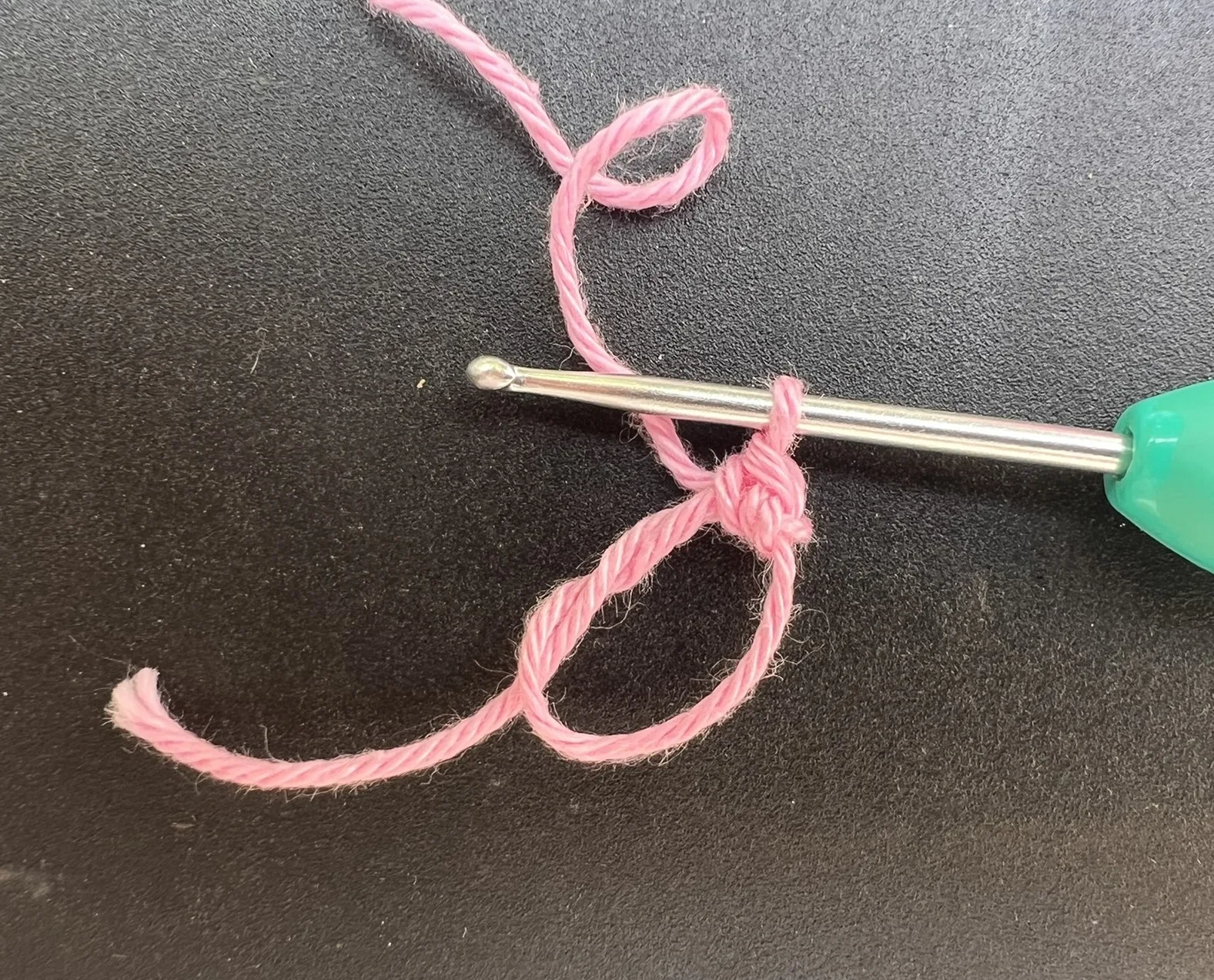
- Lay the tail across your palm and wrap the working yarn once around two fingers to make a loop. The working yarn leads to the ball; keep the tail hanging free.
- Slide the hook under the loop, catch the working yarn and pull up a loop. Carefully slip the large ring off your fingers, holding the crossing point so it stays open.
- Yarn over with the working yarn and pull through the loop on the hook to make one securing chain. This chain is not one of the six single crochets.
- Insert the hook through the large ring, under both the ring strand and the tail. Catch the working yarn and pull up a loop: two loops are on the hook. Yarn over and pull through both. You have made one single crochet.
- Place a locking marker in that first stitch. Make five more single crochets into the ring, working over the tail each time. Count six V-shaped stitch tops.
- Hold the stitches and gently pull the tail to shrink the center. Follow your pattern to join with a slip stitch or continue in a spiral. For a spiral, the next stitch goes into the marked first stitch, not into the securing chain.

Read the first two rounds
| Pattern instruction | What to do | Count at the end |
|---|---|---|
| 6 sc in MR | Make six single crochets into the ring | 6 stitches |
| Inc in each st around | Make two single crochets into each of the six stitches | 12 stitches |
For a continuous spiral, move the marker into the first stitch of each new round. A slip-stitch join is a different construction: join only when the pattern asks for it. Six stitches is this practice example, not a rule for every circle.
Keep the center from opening
Pull the center snug, then thread the tail onto a tapestry needle. Weave it through the backs of the stitches around the center and reverse direction through a different path. Check the front as you go so the center stays closed. Working over the tail holds it temporarily; it does not replace weaving it in.
Fix a ring that will not close
| Problem | Check | Try this |
|---|---|---|
| The tail will not move | Stitches may have caught the wrong strand or formed around a knot | Undo the first round and remake a loose adjustable loop |
| The center reopens | The tail may only have been crocheted over | Weave the tail in securely through more than one direction |
| Seven stitches instead of six | The securing chain may have been counted | Count the V tops from the marker; exclude the chain and joining slip stitch |
| Chenille sheds or breaks | The fluffy yarn may resist sliding | Practice in smooth yarn; pull gently or use the pattern's alternative start |
Questions
Are magic ring, magic circle, and magic loop the same?
In crochet, these names can describe the same adjustable starting loop. Magic loop also names a different technique for knitting small rounds on a long circular needle; this guide covers the crochet technique.
Does the first chain count as a stitch?
Not in this six-single-crochet example. The securing chain anchors the ring; count only the six single crochets.
Do I join the first round?
Only if the pattern says to. Amigurumi often continues in a spiral, while other motifs use joined rounds.
For another explanation of the adjustable start, see Hobbii's magic-ring lesson.