Tools & techniques
Crochet Hook Types: Materials, Shapes and Sizes Explained
Every crochet hook does the same job, but they don't all feel the same doing it. Head shape changes how stitches form, material changes how yarn slides, and the handle decides whether your hand aches after an hour. Here's how the types differ, what size to pick for your yarn, and where a better hook is worth the money.
Some links in this guide are affiliate links. We earn a commission on purchases made through them, at no extra cost to you.
The parts of a crochet hook
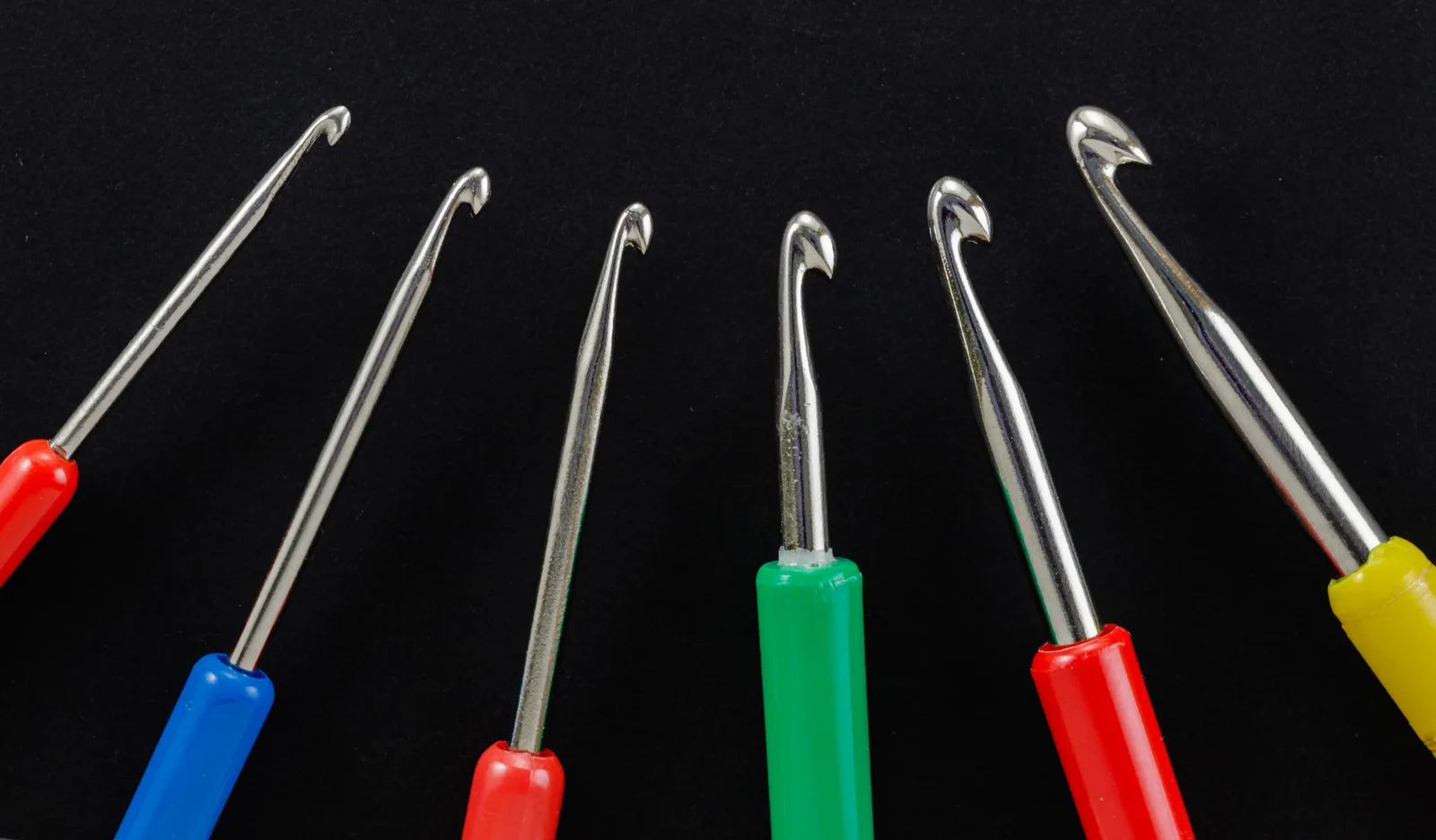
- Point (tip): pushes into the stitch. Sharper points enter tight stitches easily; rounder points are less likely to split plied yarn.
- Throat: the groove that catches the yarn. A deep throat holds the loop securely; a shallow one releases it faster.
- Shaft (shank): the straight section the loops sit on. Its diameter is the hook's size, and it sets the size of your stitches.
- Thumb rest: a flattened grip where you hold the hook.
- Handle: everything below the thumb rest. Longer, thicker handles spread the pressure across your hand.
Inline vs tapered hooks
Hooks come in two head shapes, and most crocheters strongly prefer one. Neither is better; try both before you buy a full set.
| Inline | Tapered | |
|---|---|---|
| Head | Same width as the shaft, with a deep, angular throat | Rounded and wider than the throat, which narrows into the shaft |
| Feel | Holds the loop firmly; you guide each stitch | Loops slide off quickly; a smooth, fast rhythm |
| Classic example | Susan Bates | Boye |
| Suits | Tight tension, consistent stitch size, dense fabric | Relaxed tension, quick projects, people who crochet "from the wrist" |
Crochet hook materials
| Material | Feel | Pros | Cons |
|---|---|---|---|
| Aluminum | Smooth, light, cool | Affordable, durable, fast | Can feel slippery with silk or superwash yarns |
| Steel | Very fine and rigid | Precise; made for thread and lace | Only in small sizes; thin to hold |
| Plastic or acrylic | Light, slightly grippy | Cheap; good for very large sizes | Can drag on wool; thin plastic hooks can bend |
| Wood or bamboo | Warm, with gentle grip | Quiet, controls slippery yarns | Small sizes can snap; slower than metal |
| Ergonomic handle | Thick, shaped or soft grip | Less strain on long sessions | Bulkier to carry; costs more |
Aluminum: the everyday hook
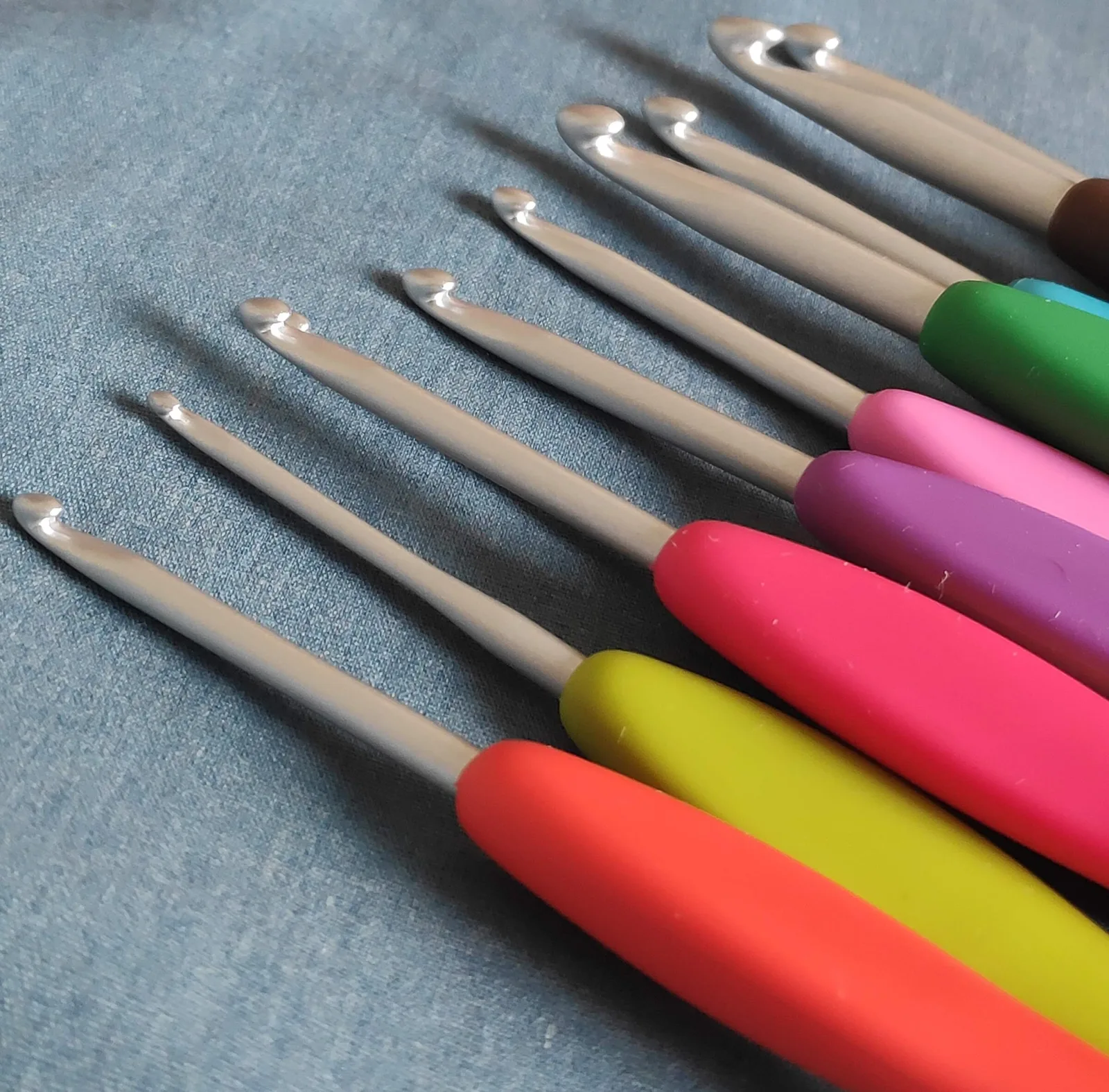
Most crocheters start with an aluminum set, and plenty never leave it. Aluminum hooks are cheap, light and slick, and they're often anodized in a different color for each size, which makes the right one easy to find in a jar of hooks. They work with almost every yarn; the only common complaint is that very smooth fibers can slip off them.
Steel: for thread and lace
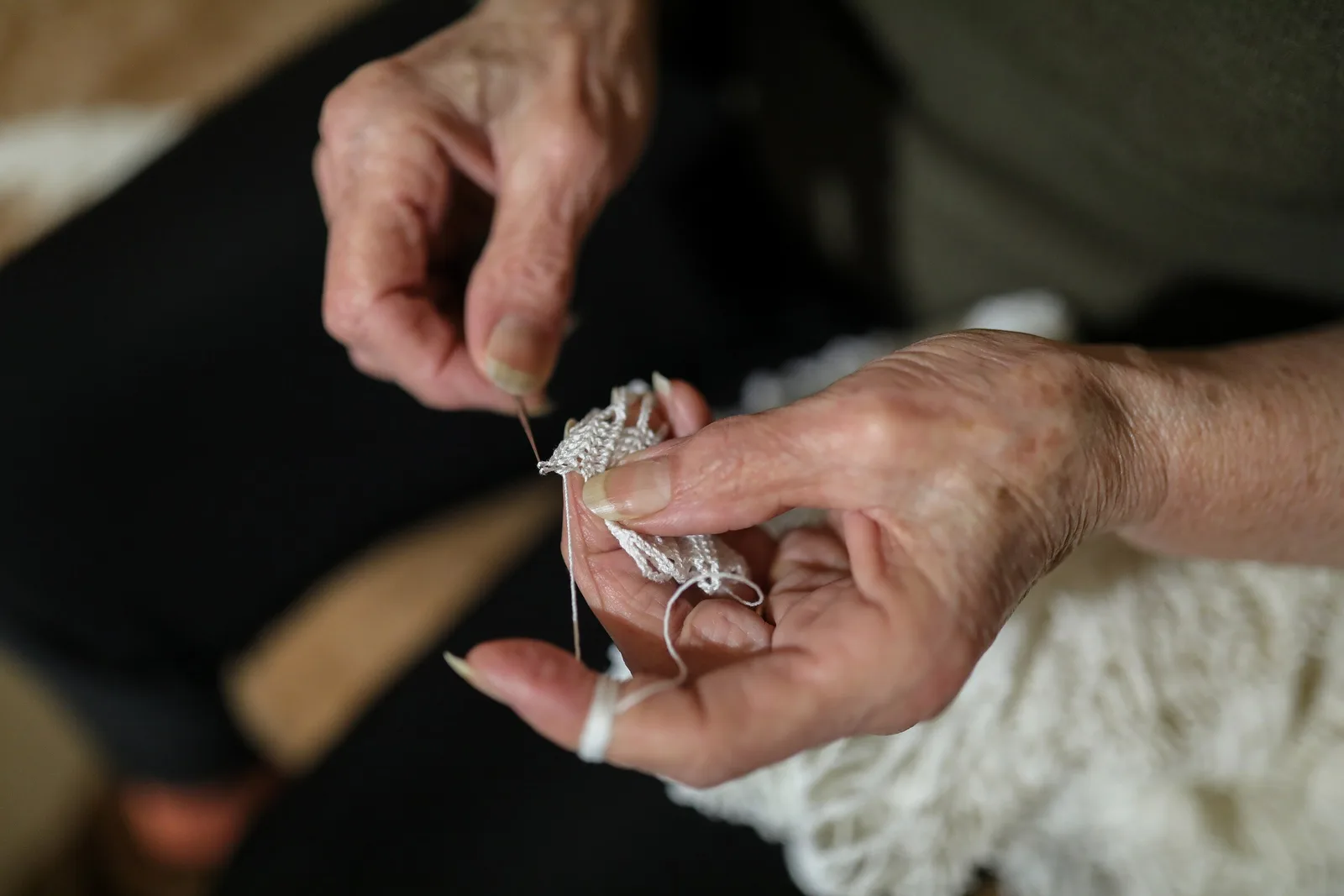
Doilies, lace edgings and fine tablecloths are worked in crochet thread on steel hooks, because aluminum is too soft to make a strong hook that thin. Steel hooks are numbered in reverse: the higher the number, the finer the hook, so a size 10 steel is finer than a size 6. Size 10 crochet thread is commonly worked on a 1.5–1.75 mm steel hook.
Wood and bamboo: warm and grippy
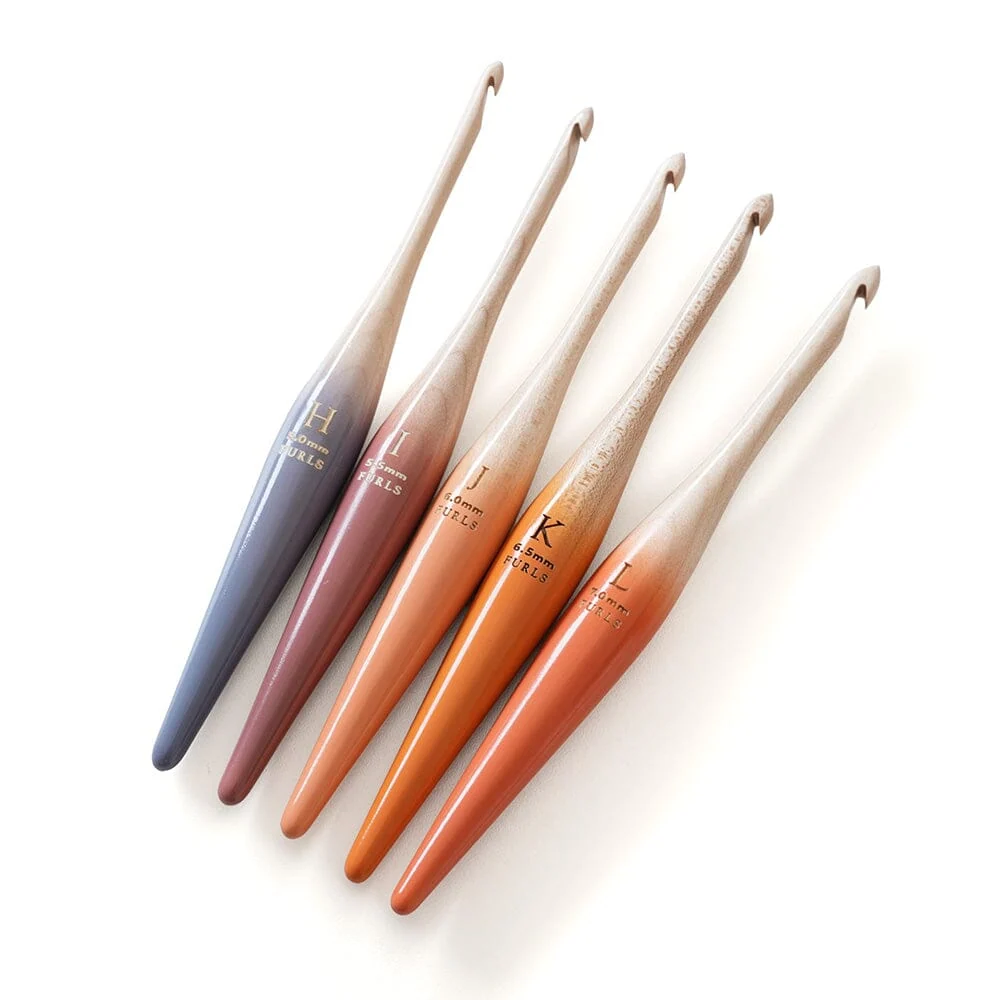
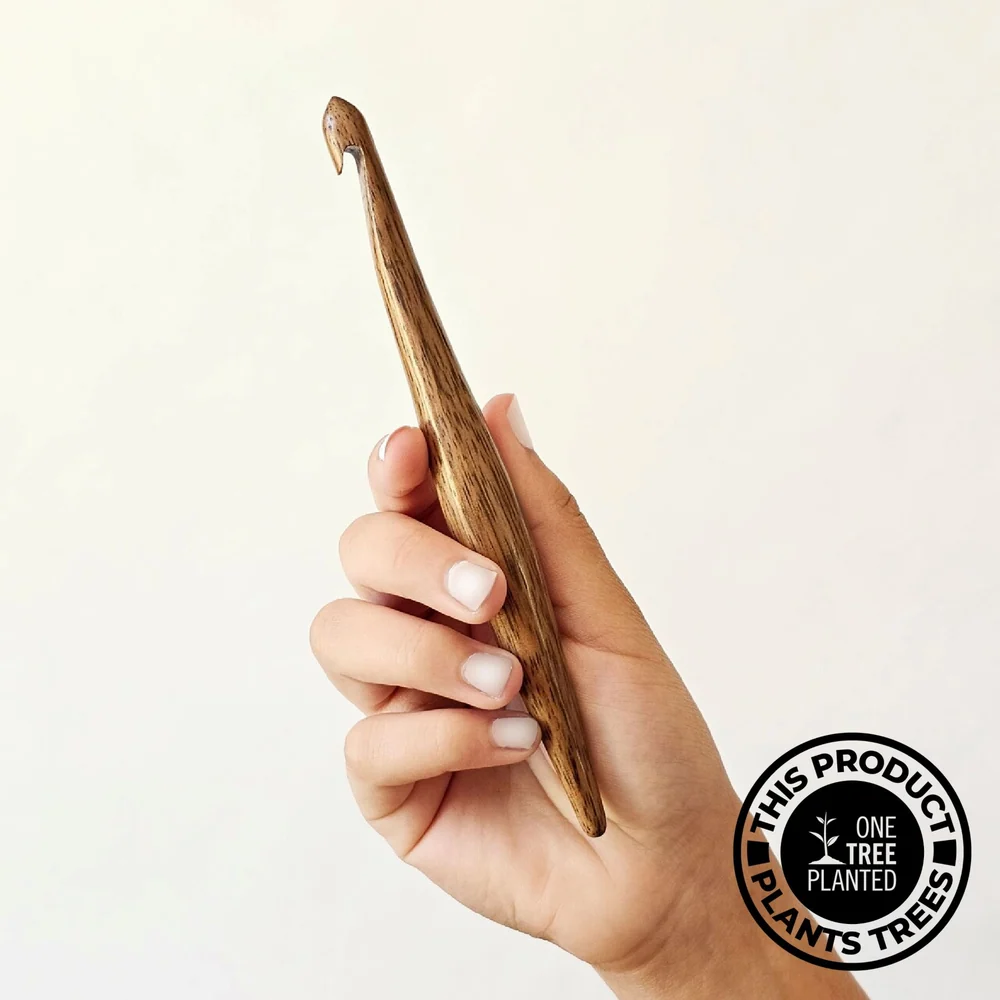
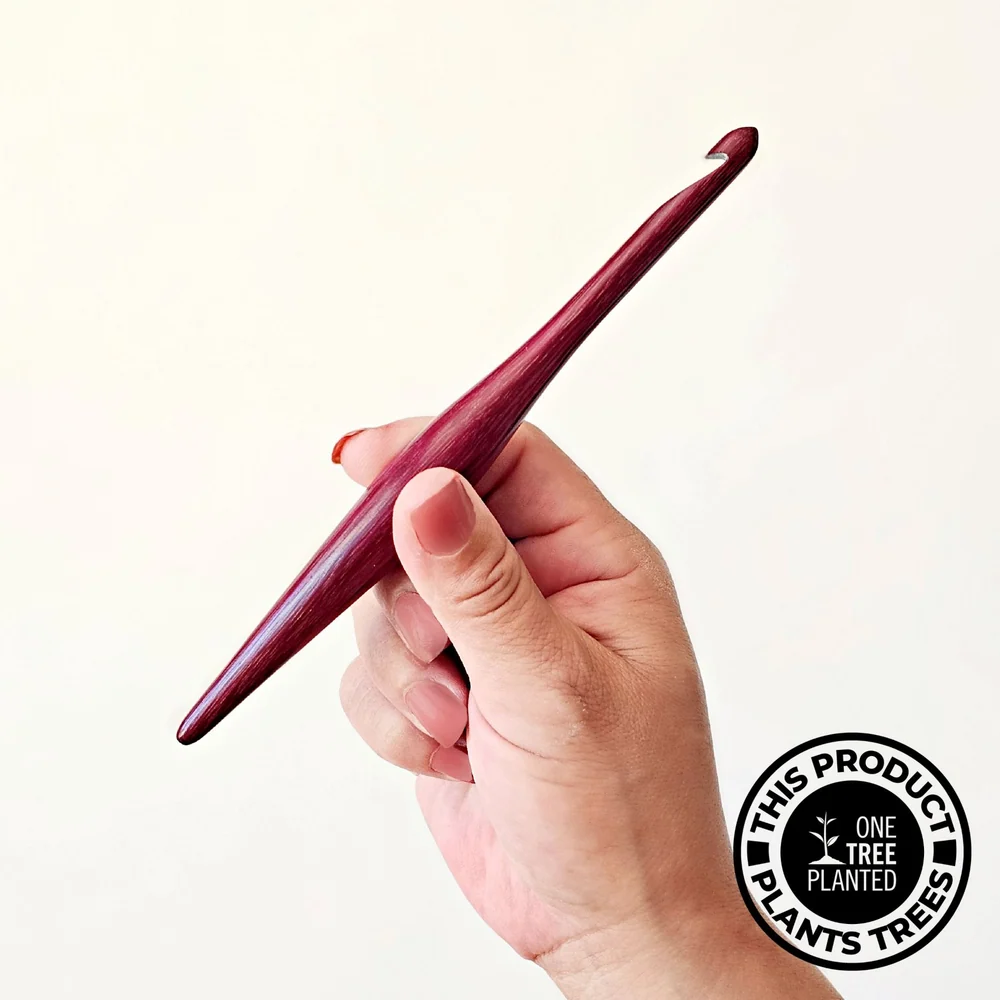
Wood holds slippery yarns like silk, bamboo viscose and superwash merino just enough to stop loops sliding off. Wooden hooks are also warm and quiet in the hand. The trade-off is strength: below about 3.5 mm, wood can snap if you crochet tightly, so many crocheters use metal for small sizes and wood for the rest. Furls' Streamline Wood hooks pair the warmth of hardwood with an ergonomic shape.
Ergonomic hooks: for long sessions
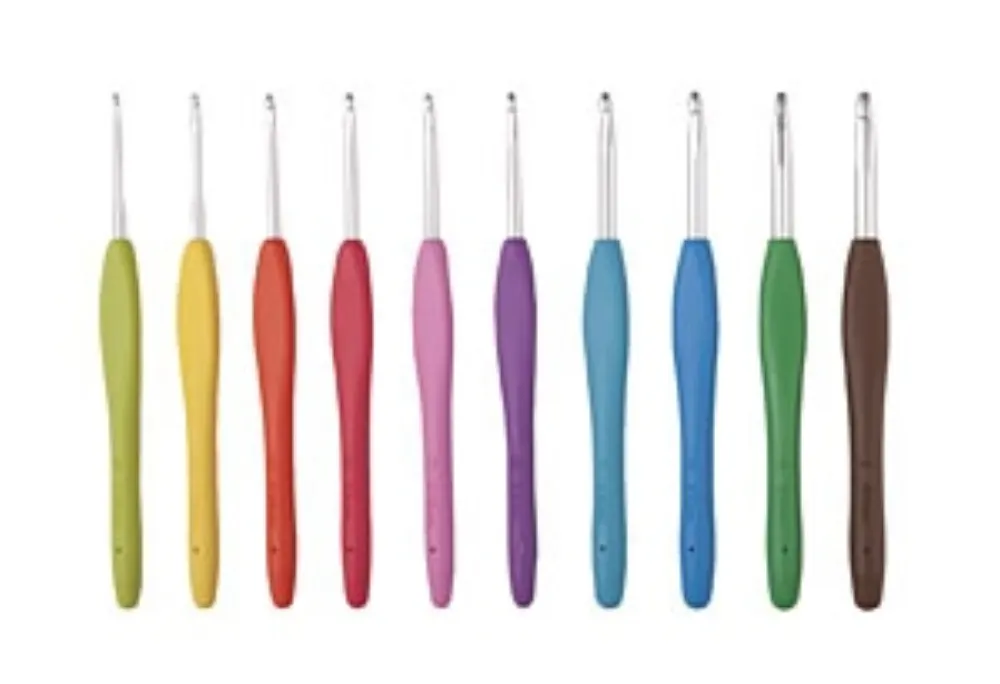
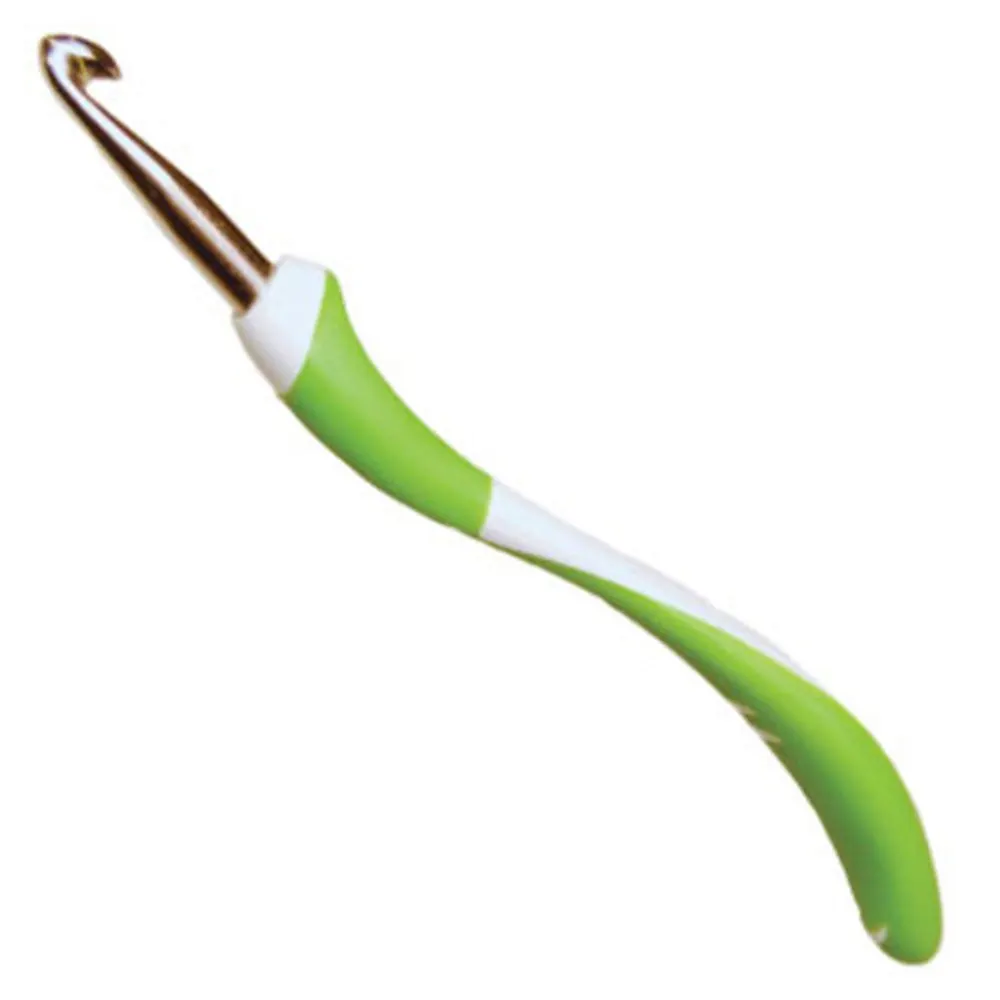
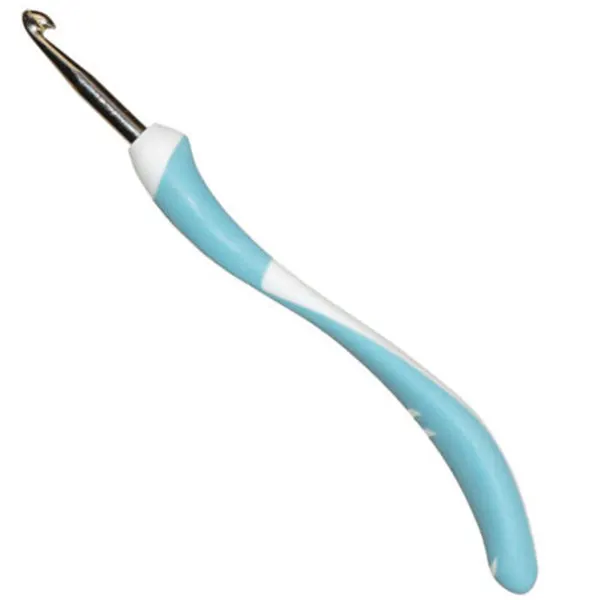
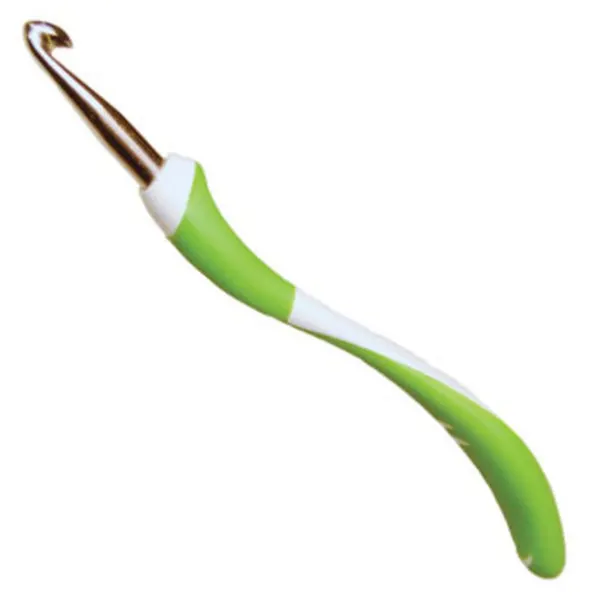
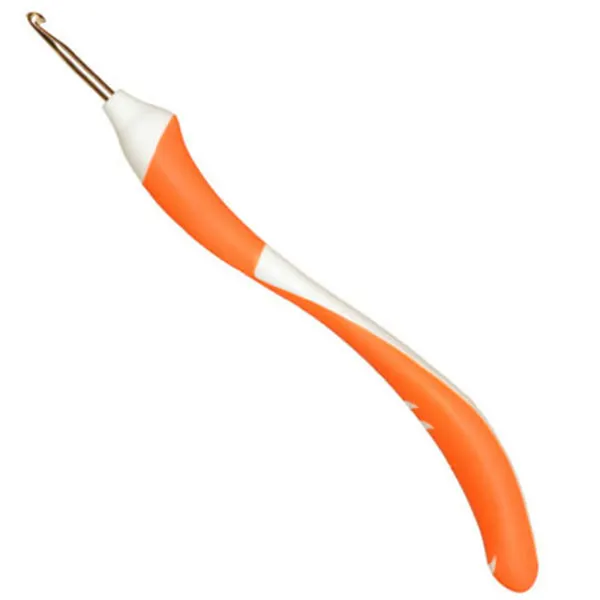
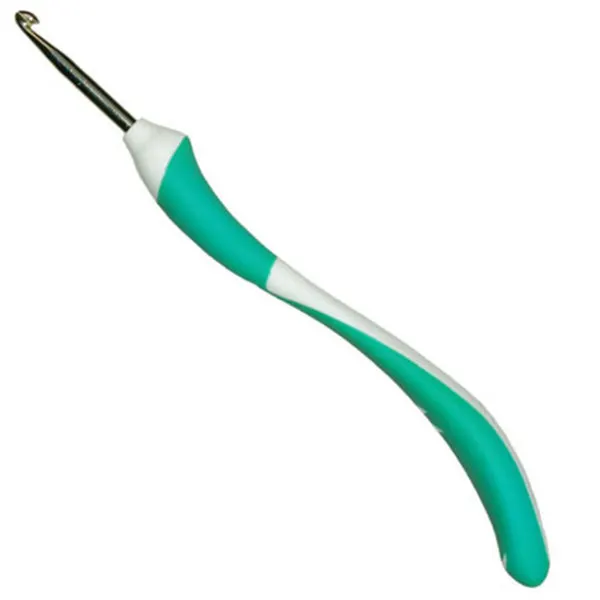
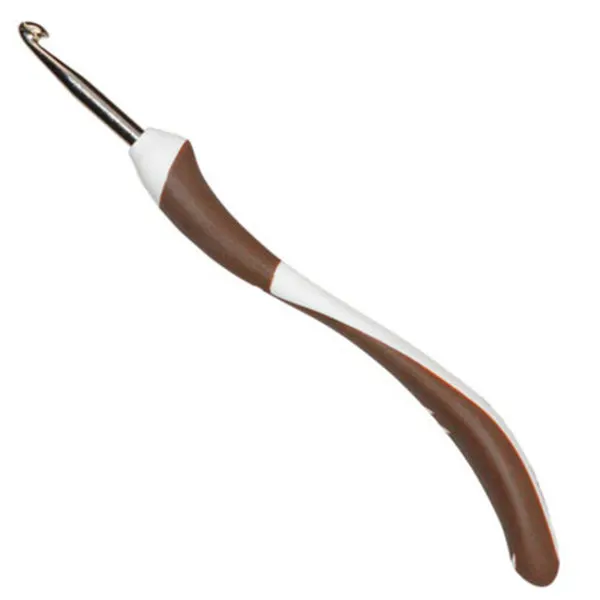
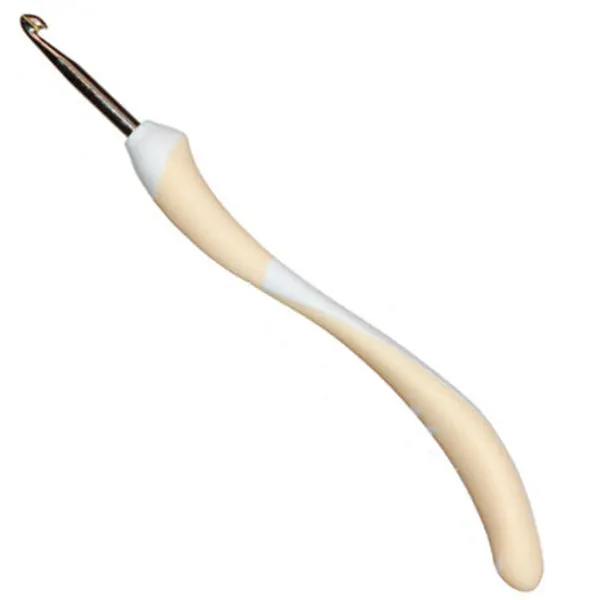
Thin hooks force you to pinch, and pinching is what makes hands and wrists ache. Ergonomic hooks have thicker, shaped or soft-touch handles that let you hold the hook loosely. Some, like the addi Swing, are shaped to keep the wrist straight; others, like the Furls Odyssey, add weight so the hook does some of the work. If crochet ever leaves your hand sore, this is the first upgrade to make.
Tunisian and interchangeable hooks
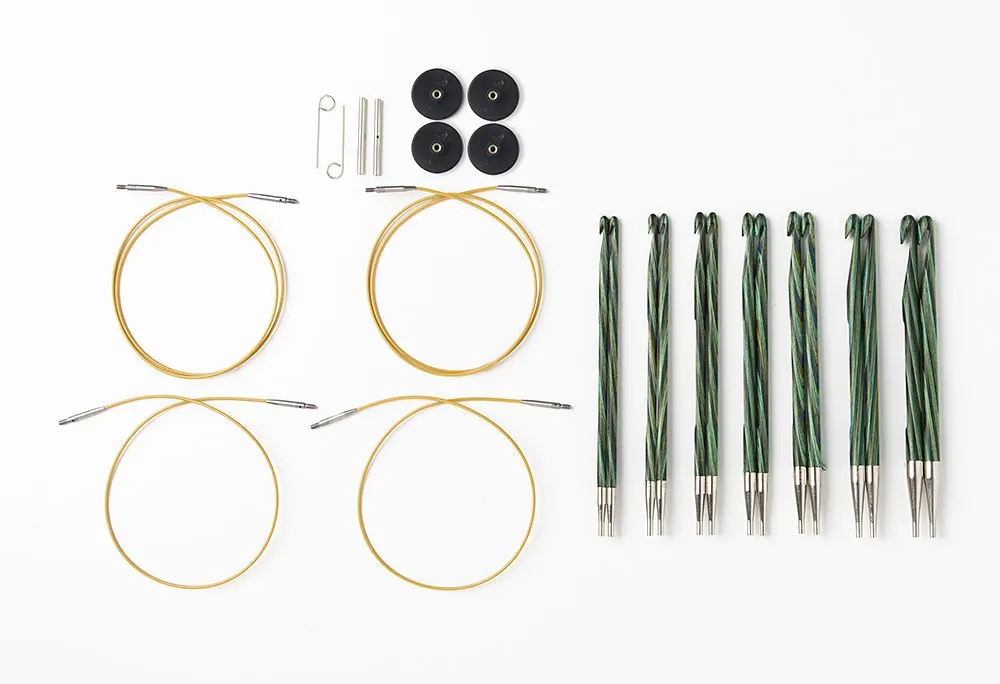
Tunisian crochet keeps a whole row of loops on the hook at once, so it needs a long hook with a stopper at the end, or a short hook joined to a flexible cable for wide pieces like blankets. Double-ended Tunisian hooks, with a hook at each end, let you work Tunisian in the round. Interchangeable sets, such as the Caspian Tunisian hooks, screw different hook sizes onto cables of different lengths, so one kit covers many projects.
Crochet hook size chart
The millimeter size is the only reliable number. US letter sizes vary between brands: the addi Swing labels its 3 mm hook a C and its 7 mm hook a K, where the Craft Yarn Council chart has C at 2.75 mm and K at 6.5 mm. Always buy and swap hooks by millimeters.
| Yarn weight | Hook size (mm) | US hook size |
|---|---|---|
| Lace and thread | 1.4–2.25 mm | Steel 6–8, B-1 |
| Fingering (#1 Super Fine) | 2.25–3.5 mm | B-1 to E-4 |
| Sport (#2 Fine) | 3.5–4.5 mm | E-4 to 7 |
| DK and light worsted (#3 Light) | 4.5–5.5 mm | 7 to I-9 |
| Worsted and aran (#4 Medium) | 5.5–6.5 mm | I-9 to K-10.5 |
| Bulky (#5) | 6.5–9 mm | K-10.5 to M-13 |
| Super bulky (#6) | 9–15 mm | M-13 to Q |
Which crochet hook should you buy?
- Starting out: an aluminum set from about 2.25 to 6.5 mm covers most yarns. Add an inline and a tapered hook in 5 mm to find out which head you prefer.
- Crocheting for hours: an ergonomic hook in the two or three sizes you use most.
- Slippery yarns: wood or bamboo.
- Doilies and lace: a set of steel hooks.
- Blankets in Tunisian crochet: a cabled Tunisian hook or an interchangeable set.
Hooks worth upgrading to
Knit Picks
Amour Crochet Hook Set
at Knit Picks
addi
Swing Hooks
at Jimmy Beans Wool
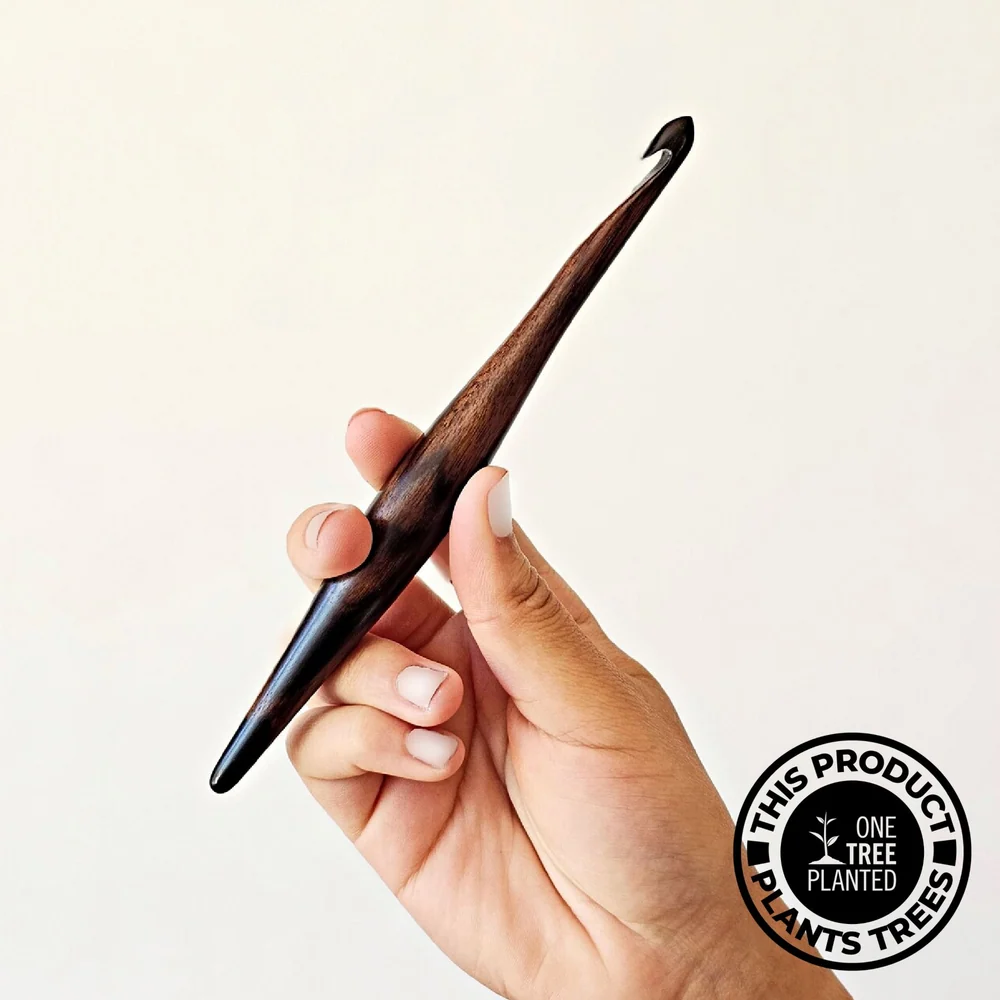
Furls
Streamline Wood Crochet Hook
at Furls
Knit Picks
Caspian Tunisian Hooks, In the Round
at Knit Picks
Color-coded ergonomic hooks, a wrist-friendly curve, warm hardwood and Tunisian hooks on cables. See all crochet hooks in the shop.
Questions
What size crochet hook should a beginner use?
A 5 mm (H-8) hook with a smooth, light-colored worsted-weight yarn. The stitches are big enough to see and count, and it's the size many beginner patterns call for.
Does the hook material change my gauge?
It can. Yarn slides faster over metal than over wood, so many people work slightly looser on aluminum. If you change hook type mid-project, check your gauge again.
Can I use a knitting needle size chart for crochet hooks?
Only the millimeter sizes match. US knitting needles use numbers and crochet hooks mostly use letters, and the two systems don't line up, so compare in millimeters.