Buying yarn
Michaels vs Local Yarn Stores (LYS): Where to Buy Yarn
Supporting a local yarn store (LYS) is our preference when the budget allows. But a sweater's worth of yarn can make that impossible, and shopping within your means needs no apology. Michaels and other big-box craft stores can be a great place to buy affordable project yarn, try a new technique, or find out whether you enjoy a craft before spending more.
Some links in this guide are affiliate links. We earn a commission on purchases made through them, at no extra cost to you.
Choose the shop for this project
You do not have to pick one kind of store forever. Buy blanket yarn at Michaels, visit your LYS for a special sweater, and bring home one memorable skein from a trip. The useful question is what this purchase needs: an affordable quantity, help choosing a fiber, a particular color, or a connection to the place you are visiting.
| What you need | A useful first stop | What to check |
|---|---|---|
| Affordable yarn for a large blanket | Michaels or another big-box store | Whole-project cost, care instructions, and enough matching yarn |
| A low-cost way to try knitting or crochet | Either shop with suitable yarn in your budget | Smooth, light-colored yarn and one appropriately sized tool |
| Help planning a fitted garment | An LYS offering project advice | Relevant knitting or crochet expertise, appointments, and any fees |
| A particular fiber, local dyer, or unusual color | An LYS carrying what you want | Actual stock, yardage, and whether the fabric suits your pattern |
| A yarn souvenir from a trip | An independent shop at your destination | Where the yarn is made or dyed, a realistic project, and enough yardage |
| The exact yarn you already use | Whichever shop stocks it affordably | Color number, dye lot, quantity, and the final checkout price |
When Michaels makes sense
A big-box store can make a project possible when a specialty-yarn budget cannot. That matters for large blankets, gifts, practice pieces, and anyone watching their spending. Michaels carries a range of yarns; judge the individual yarn by its fiber, feel, care needs, construction, and yardage rather than assuming the store name tells you its quality.
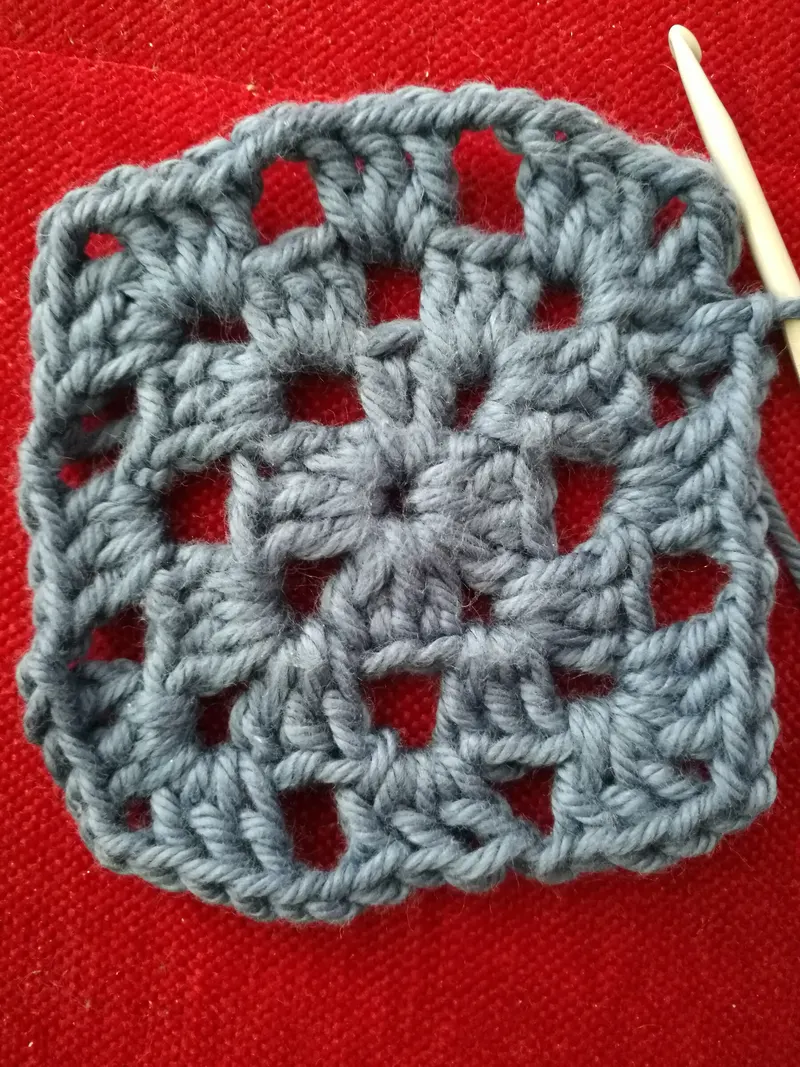
It is also a sensible place to experiment. Before investing in a sweater quantity of a fiber you have never used, try a small project or swatch with a suitable affordable yarn. Practice granny squares, learn increases, test a color combination, or see whether you like knitting at all. If you are learning to see your stitches, smooth, light-colored yarn is generally easier to follow than dark, fluffy, or heavily textured yarn.
Convenience counts too. Michaels offers in-store and curbside pickup, subject to local availability. Check your selected store and wait for the order to be ready before making the trip. A website listing does not establish that your branch has a full project's quantity in one dye lot.
When an LYS is worth the extra cost
A good local yarn store can help you make decisions that are difficult to make from a label: which fabric suits a pattern, how two colors work together, or whether a substitute has the right drape and recovery. Seeing sample garments and touching the yarn can be particularly useful for something you will wear against your skin. The value depends on what that particular shop offers.
For a first fitted sweater, a complicated substitution, or a project with a new fiber, that conversation may be worth budgeting for. Bring the pattern, your size, the required yardage, and a clear spending limit. Ask, 'Can we make this project work for this total budget?' An LYS may have affordable workhorse yarns or sale stock as well as expensive hand-dyed skeins.
Ask about services before assuming they are included. Project help, lessons, winding, and social groups vary by shop. Crochet support varies too, so check whether someone can help with your specific technique. For example, Knitty City's FAQ describes winding and private lessons and explains that wound yarn cannot be returned or exchanged there. That is one shop's policy, not a rule for every LYS.
Price differences: compare the whole project
Small balls and large skeins can make shelf prices misleading. Compare usable yardage and the number of whole balls you must buy, after checking that the yarns actually suit the same project. Include delivery or travel costs and any paid services you plan to use. Discounts only count if they apply to the yarn in your basket; future rewards are not the same as money off today's purchase.
| Budgeting example | Assumed price and yardage | Cost per 100 yd | For a 1,000 yd target |
|---|---|---|---|
| Budget acrylic | $5 for 250 yd | $2.00 | 4 balls; $20 |
| Big-box wool option | $8 for 200 yd | $4.00 | 5 balls; $40 |
| LYS workhorse wool | $12 for 220 yd | $5.45 | 5 skeins; $60 |
| Specialty hand-dyed wool | $28 for 220 yd | $12.73 | 5 skeins; $140 |
In these examples, choosing the workhorse LYS wool instead of the big-box wool adds $20 to the project; choosing the hand-dyed option adds $100. That can be a reasonable treat for one person and completely outside another person's budget. Neither price is a measure of your skill or how much you care about the finished item. An LYS does not only sell the most expensive category, and Michaels is not limited to the cheapest one.
These are shopping-budget comparisons, not interchangeable yarn recommendations. Acrylic and wool can produce different fabrics and have different care needs. Even two wools may differ in construction and gauge. Compare like-for-like where possible, and use a washed swatch to confirm the fabric. Our yarn substitution guide explains those checks.
Use this calculation with the actual shelf prices: price per 100 yd = ball price ÷ ball yardage × 100. Then divide your total yardage by one ball's yardage, round up to a whole ball, and multiply by its price. For example, $6 for 200 yd and $12 for 400 yd both cost $3 per 100 yd, but a 1,000 yd target costs $30 with the first yarn and $36 with the second because you must buy whole balls.
The differences you might not know to ask about
Some differences only become obvious after you get home or wash the finished piece. They are not exclusive to either type of shop, and a higher price does not settle them. Ask specific questions and inspect the yarn rather than relying on a big-box or boutique label.
| Easy-to-miss difference | Why it matters | What to ask or check |
|---|---|---|
| Same weight category, different fabric | Two worsted yarns can have different fiber blends, twist, loft, and yardage per gram | Compare the labels and wash a swatch; the weight name alone is not a substitution test |
| Hanks need winding | A twisted hank needs to be opened and wound before working from it; a ready-to-use ball is packaged differently | Does this yarn need winding, is the service included, and does winding affect returns? |
| Help may be a separate service | Buying yarn does not necessarily include a lesson, project rescue, or help with a crochet pattern | Who can help with this project, when are they available, and what does it cost? |
| Color batches and hand-dyed variation | A color name may match while the actual skeins look different | Check dye lots and compare skeins together; ask the dyer whether alternating skeins is recommended |
| Wash behavior and care | A soft ball can become a fabric that grows, feels different, or needs more careful washing than expected | Follow the exact care label and wash the swatch as you will wash the finished item |
| Returns after preparation | Wound, opened, or clearance yarn may have different return conditions | Check the policy before winding or buying extra, and keep the receipt and bands |
| Local shop versus locally made yarn | A shop can carry yarn from another region or country; a locally dyed yarn may use an imported base | Where was the fiber sourced, spun, and dyed? Which part of the story matters for your souvenir? |
| Online seller and actual stock | A website may list third-party products or colors that are not on your local store's shelf | Check who sells and ships it, the pickup location, the available quantity, and which return policy applies |
Bring home yarn as a travel souvenir
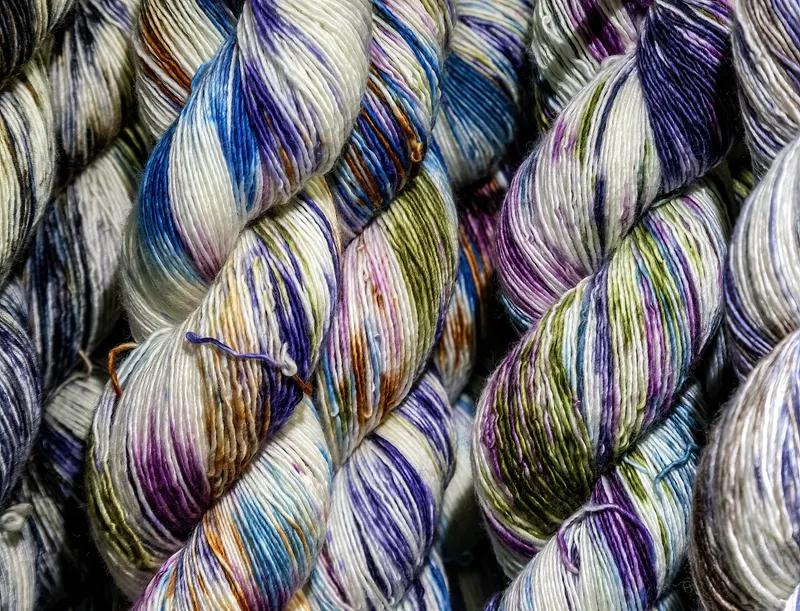
An LYS can be one of the nicest stops on a trip: a chance to meet local makers and bring home something you will turn into a memory you can wear. Ask whether the shop stocks yarn spun nearby, wool from a regional breed, or colors from a local dyer. A yarn sold locally is not necessarily made locally; either can be a lovely souvenir, but the story should be accurate.
- Set a souvenir budget before browsing. One skein for a small accessory can be more realistic than an unplanned sweater quantity.
- Check a pattern or project idea against the skein's usable yardage. 'One-skein project' does not mean any skein will be enough; sock patterns also depend on size, cuff length, and yarn specifications.
- If you want a larger project, buy its full quantity and check dye lots before leaving. Reordering from home may involve shipping costs, limited stock, or a different batch.
- Keep the ball band and shop details. Note the place, date, dyer, color, and project idea so the yarn keeps its connection to the trip.
Support local in a way you can sustain
When comparable yarn fits your budget and the shop is helpful, we prefer buying locally: the purchase supports that store and the community around it. But supporting local does not require buying every skein there. A single special project, an occasional useful notion, or a paid class can be a better fit than stretching your finances for everyday yarn.
Be considerate about advice, too. If you want substantial help with yarn bought elsewhere, ask whether the shop offers a paid help session rather than assuming staff can provide a free lesson. If there is no accessible LYS near you, an independent online shop may be another option. Distance, opening hours, accessibility, and budget are all valid parts of the decision.
Check these things at either store
- Read the fiber content and care instructions. Choose for how the finished item will actually be used and washed.
- Buy enough matching yarn at the start. Check the color number and dye lot on every ball where a dye lot is listed.
- Ask about returns before having hanks wound, opening packaging, or buying clearance stock. Keep the receipt and ball bands.
- Inspect the yarn and compare colors in good light. A familiar brand or a higher price cannot replace checking the actual product.
- Confirm any help or services you need, including availability, fees, and whether an appointment is required.
The Craft Yarn Council's label guide explains the fiber, yardage, care, gauge, and dye-lot information to look for. For Michaels promotions, check its current coupon policy and your final basket rather than relying on an old discount mentioned online.
Questions
What does LYS mean?
LYS means local yarn store: usually an independent shop specializing in yarn and related supplies. Each shop has its own stock, prices, expertise, and service policies.
Is Michaels yarn good for beginners?
It can be. Choose an affordable yarn that suits your project and lets you see the stitches clearly. Smooth, light-colored yarn is often easier for practice than dark, fluffy, or highly textured yarn. You do not need expensive yarn to start.
Is yarn from a local yarn store always better?
No. Suitability depends on the individual yarn and project. An LYS can offer specialist stock, samples, advice, and community, but a higher price does not guarantee a better result. Big-box yarn can be the right choice for your budget and intended use.
What yarn should I buy as a travel souvenir?
Choose yarn with a connection you value, such as a local dyer or regional wool, and enough yardage for a realistic project. Keep its label and the shop details. Check where it was made if local production matters to you.
Can I ask an LYS for help with yarn bought at Michaels?
Ask the shop first. Some offer paid help sessions or lessons; policies and availability vary. Bring the pattern and yarn label, describe the help you need, and check the fee before your visit.