Learn to knit & crochet
How to Start Knitting: Supplies, Stitches & First Projects
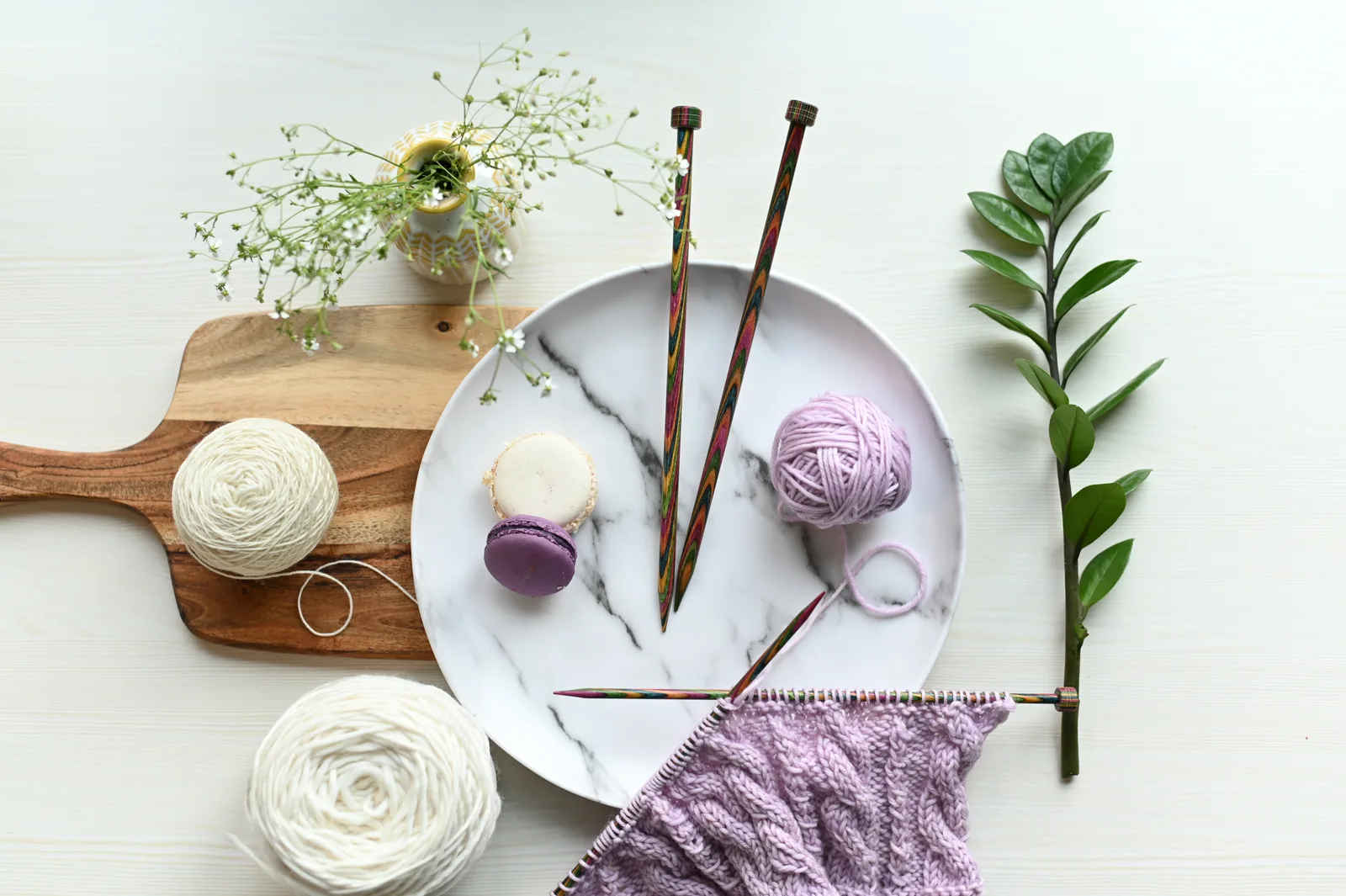
Knitting needs very little to start: one ball of yarn, one pair of needles and four techniques. Get those right and almost everything else in the craft is a combination of them. Here's what to buy, what to learn first, and what to make while you learn.
Some links in this guide are affiliate links. We earn a commission on purchases made through them, at no extra cost to you.
What you need to start
Skip the beginner kits full of things you won't use for months. The short list below covers your first three projects.
| Supply | What to get | Why |
|---|---|---|
| Yarn | Smooth, light-colored worsted (#4 Medium), wool or a wool blend | Easy to see each stitch, and wool's spring forgives uneven tension |
| Needles | US 8 (5 mm), straight or a 24 in circular, in wood or bamboo | Wood grips the stitches so they don't slide off while you're slow |
| Tapestry needle | A blunt needle with a large eye | For weaving in the ends when you finish |
| Scissors | Any small, sharp pair | Yarn snaps unevenly if you try to break it |
| Stitch markers | A handful of rings or locking markers | Mark the start of a round or a pattern repeat |
| Tape measure | A soft one, in inches and centimeters | For measuring gauge and length |
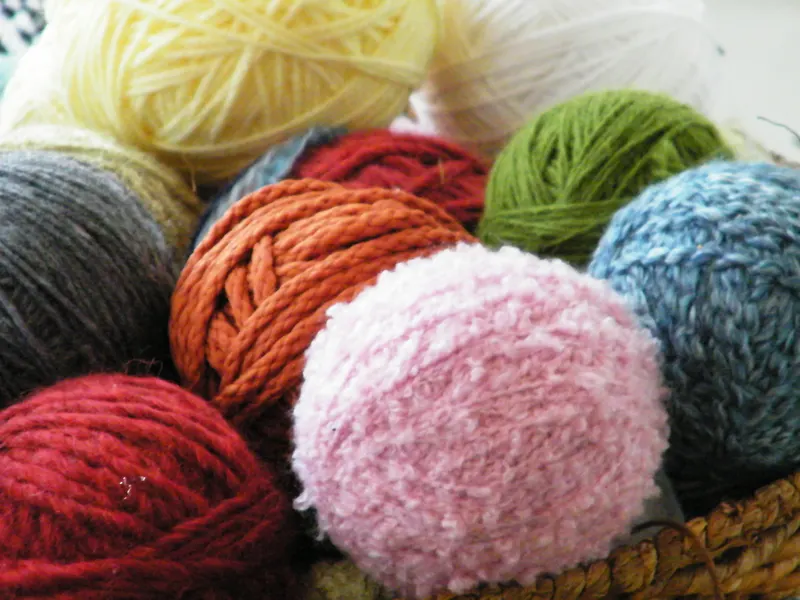
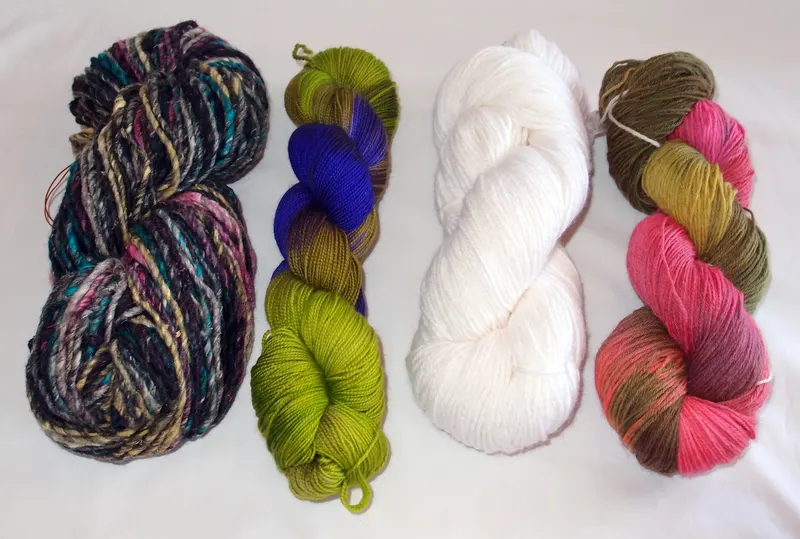
Avoid dark colors, fuzzy yarns like mohair, and novelty or bouclé yarns for now. They hide the stitch structure, so you can't see where your needle should go or spot a mistake. Plain, plied, light-colored yarn shows you everything.
Straight or circular needles?
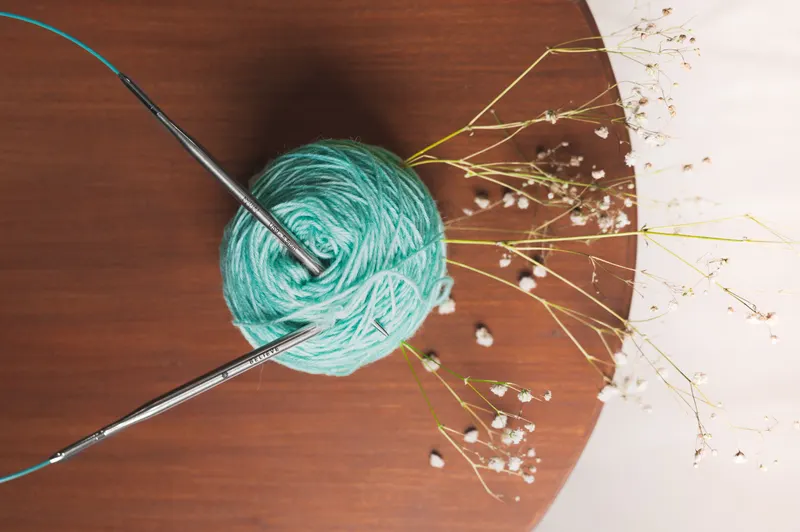
Straight needles are the classic picture, but a circular needle does everything a straight pair does and more: you can knit back and forth on it, the weight of the work rests in your lap instead of on your wrists, and later you'll use the same needle to knit hats in the round. Our guide to knitting needle types compares them all. A 24 in (60 cm) circular in US 8 is the most useful single needle a beginner can own. A wooden one like the Lantern Moon Ebony Destiny circular is smooth without being slippery.
| US size | Metric | Typical yarn |
|---|---|---|
| US 6 | 4 mm | DK |
| US 7 | 4.5 mm | Light worsted |
| US 8 | 5 mm | Worsted |
| US 9 | 5.5 mm | Worsted to aran |
| US 10 | 6 mm | Aran |
| US 10½ | 6.5 mm | Bulky |
The four techniques to learn first
- Cast on. Puts the first row of loops on the needle. The long-tail cast-on is the most common: firm, neat and stretchy enough for most projects. Leave a tail about three times the width of what you're casting on. For a simple scarf without a pattern, the cast-on calculator works out the stitch count from your swatch gauge and desired width.
- Knit stitch. Insert the right needle into the front of the first loop from left to right, wrap the yarn around it, pull the new loop through and slip the old one off.
- Purl stitch. The knit stitch worked from the other side: yarn in front, needle in from right to left. A purl on one side is a knit on the other.
- Bind off. Locks the last row so it can't unravel. Knit two stitches, lift the first over the second, knit one more, and repeat.
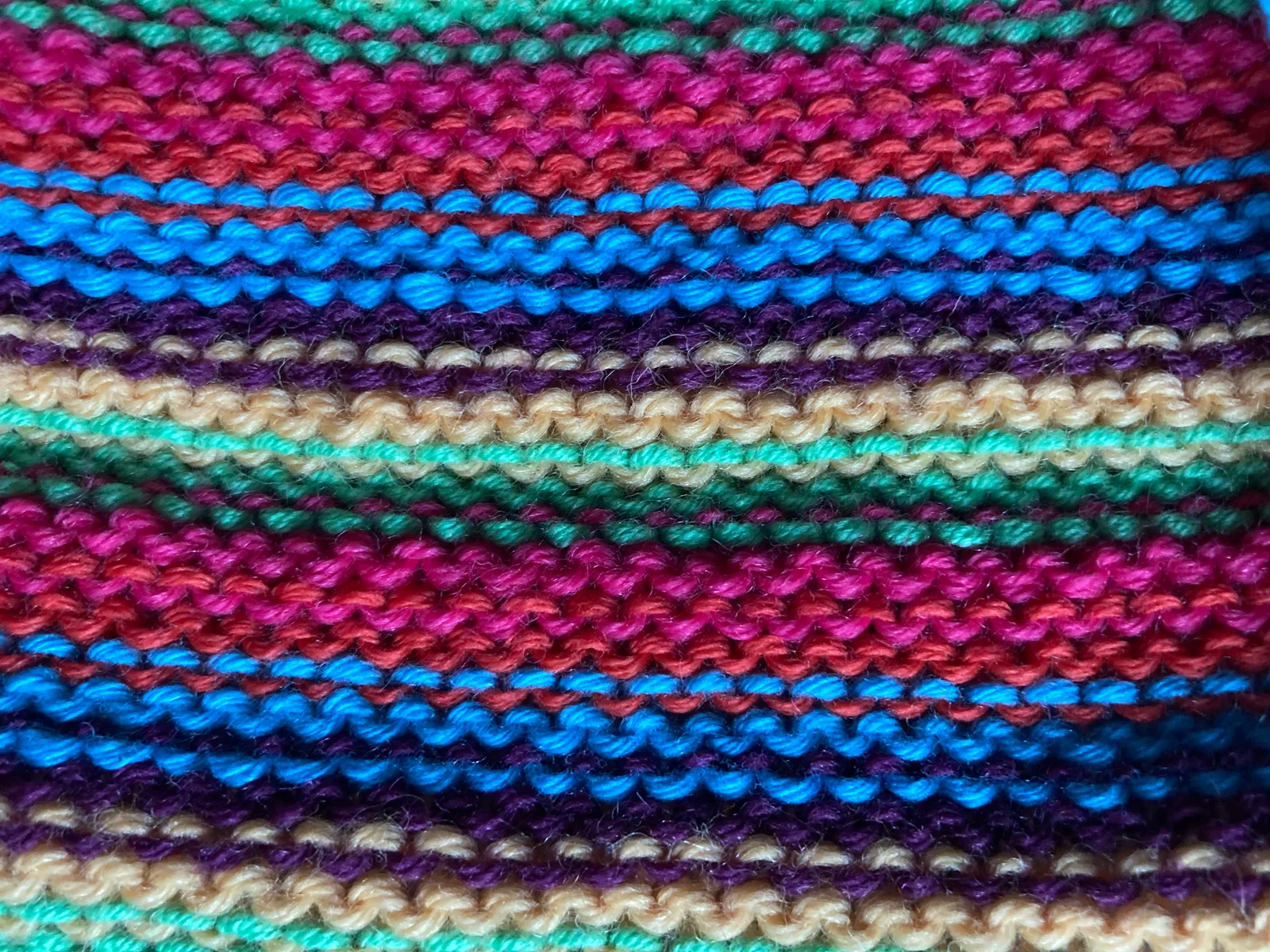
Combine knit and purl and you get every basic fabric. Garter stitch is knit every row: ridged, squishy and flat, so it's perfect for scarves. Stockinette is knit one row, purl the next: smooth Vs on the front, bumps on the back, and the edges curl. Ribbing alternates knits and purls in the same row (k1, p1 or k2, p2) and stretches, which is why it's used at cuffs and hat brims.
Three first projects
Pick something small, flat and forgiving. Each project below adds one new skill to the last.
| Project | Skills | Yarn | Approximate amount |
|---|---|---|---|
| Dishcloth | Cast on, knit, bind off | Cotton worsted | 70–90 yd |
| Garter scarf | Knit, joining a new ball, weaving in ends | Wool worsted | 300–400 yd |
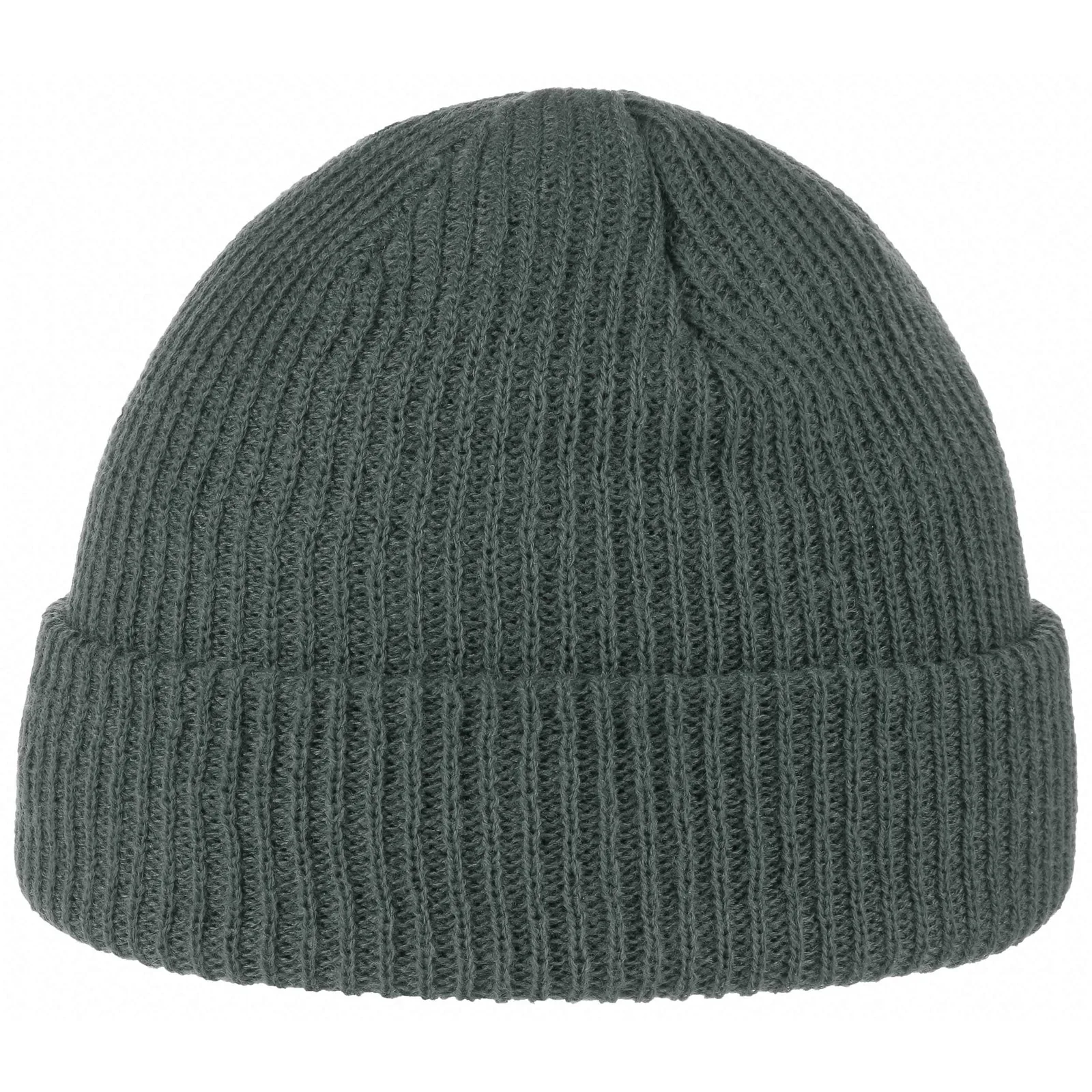
| Ribbed hat | Purl, ribbing, knitting in the round, decreases | Wool worsted | 150–220 yd |
A dishcloth is the classic first piece because it's small enough to finish in an evening and nobody minds if it's uneven. A garter scarf teaches rhythm and tension, and you'll get better visibly from one end to the other. A hat moves you onto a 16 in circular and introduces decreases (k2tog, knit two together) to shape the crown.
How to read a knitting pattern
Patterns are written in abbreviations. These cover most beginner patterns:
| Abbreviation | Meaning |
|---|---|
| CO / BO | Cast on / bind off |
| k / p | Knit / purl |
| k2tog | Knit two together (a right-leaning decrease) |
| ssk | Slip, slip, knit (a left-leaning decrease) |
| yo | Yarn over (adds a stitch and makes a hole) |
| RS / WS | Right side / wrong side of the fabric |
| pm / sm | Place marker / slip marker |
| rep from * | Repeat the instructions after the asterisk |
Every pattern also lists a gauge: the number of stitches and rows in 4 in (10 cm). For a scarf it hardly matters. For a hat or a sweater it decides the size, so knit a small square first and measure it. Our guide to substituting yarn explains how to swatch and what to do if your numbers are off.
Habits that make learning faster
- Knit a little every day. Fifteen minutes daily builds muscle memory faster than a long session once a week.
- Keep your tension relaxed. Tight stitches are the usual cause of aching hands and needles that won't go in. Stitches should slide along the needle.
- Learn to read your knitting. Look at the fabric until you can tell a knit from a purl. Then you can find your place without the pattern.
- Use a lifeline on anything tricky. Thread a length of smooth scrap yarn through every stitch of a finished row. If you need to rip back, you can't go past it.
- Finish things. Weave in the ends and wear or use the piece, even if it's lumpy. The second one will be better.
A good pair of small sharp scissors and a needle gauge for unlabeled needles are the next tools worth owning. Once you've finished a scarf and a hat, DK yarn is a natural next step for lighter sweaters and accessories.
Questions
Is knitting or crochet easier to learn?
Both take a few sessions to click. Crochet has only one live loop at a time, so mistakes are easier to undo. Knitting holds every stitch on the needle, which feels awkward at first but makes stretchy, drapey fabric that's hard to match with crochet.
What size needles should a beginner use?
US 8 (5 mm) with a worsted-weight yarn. The stitches are large enough to see and handle, but not so large that the needles feel clumsy. US 7 or US 9 work just as well.
How long does it take to learn to knit?
Most people can cast on and knit a row in their first session. Even, comfortable stitches usually take a first project or two. Purling, ribbing and simple decreases follow quickly once the knit stitch feels natural.