Tools & techniques
Sleeve Island: How to Finish Your Sweater Sleeves
Sleeve Island is where sweaters go to wait. The body is done, it looks almost like a garment, and then there are two long tubes still to knit. Here's why sleeves stall, and the techniques that get them finished.
Some links in this guide are affiliate links. We earn a commission on purchases made through them, at no extra cost to you.
Why sleeves feel endless
Sleeve Island is knitters' and crocheters' shorthand for the stage after the body of a sweater is finished and before the sleeves are. It's a real slowdown, and there are practical reasons for it:
- There are two of them, and the second is an exact repeat of the first, with none of the novelty.
- They're long. An adult sleeve is often 17–19 in (43–48 cm) from underarm to cuff, close to the length of the body.
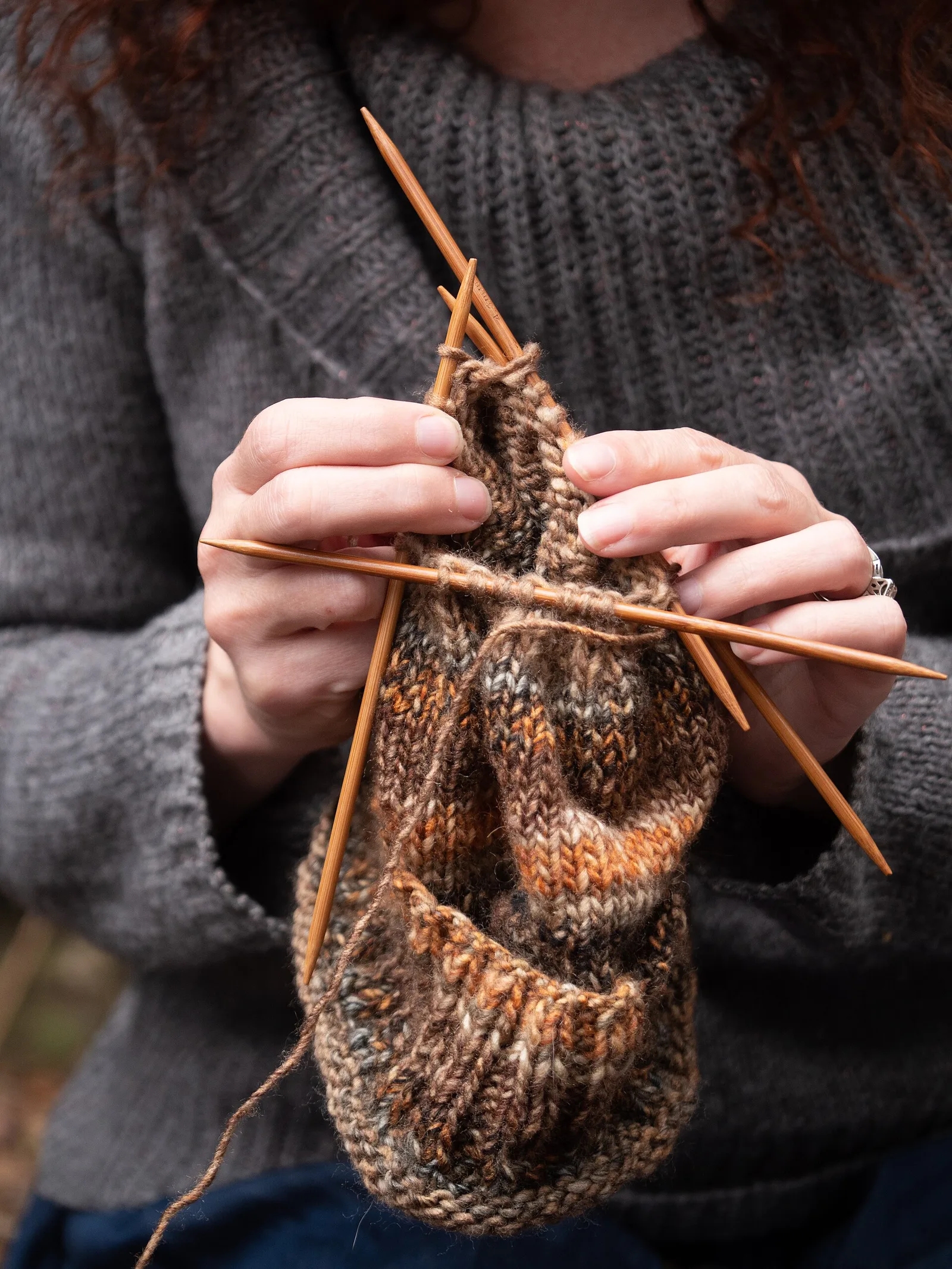
- Small circumferences are fiddly. Below about 16 in around, a standard circular needle won't stretch around the stitches, so you switch to double-pointed needles or magic loop, which feel slower.
- Progress is hard to see. A sleeve is mostly plain stockinette with a decrease every inch or so, and the body was where the interesting shaping happened.
None of these are about willpower. Most of them can be designed out of the process.
Six ways off the island
1. Knit both sleeves at once
Put both sleeves on one long circular needle (32–40 in, or 80–100 cm) using the magic loop method, each with its own ball of yarn. You work across sleeve one, then sleeve two, every round. The decreases happen on the same round for both, so they come out identical, and when you bind off the first one, the second is finished too. For sleeves knit flat, cast both on the same straight or circular needle side by side.
2. Knit the sleeves first
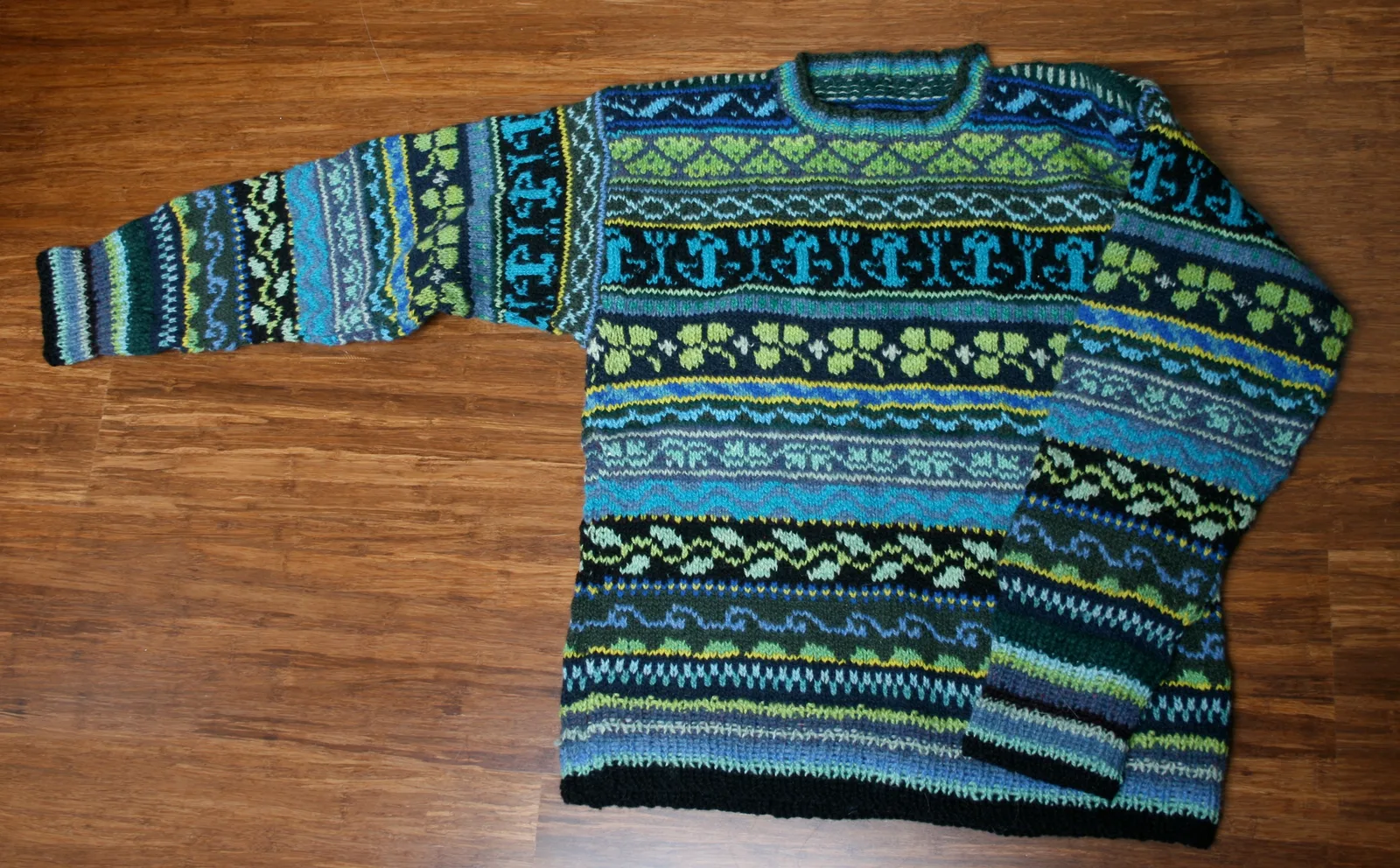
If your pattern is knit in pieces, or it's a bottom-up yoke where the sleeves are joined to the body, you can often start with a sleeve. A sleeve is also a large, honest gauge swatch: if your gauge is off, you find out before investing in the body. The body then becomes the reward.
3. Alternate sleeve and body
In top-down sweaters, nothing forces you to finish the body before starting the sleeves. Knit a few inches of body, then a few inches of each sleeve, and keep rotating. You'll never be left with two full sleeves at the end.
4. Use the right needle for the circumference
| Method | Works for | Notes |
|---|---|---|
| Double-pointed needles | Any small tube, down to a cuff | Four or five needles; sets come in 6–8 in lengths |
| Magic loop | Any circumference, one or two sleeves | One long circular, 32 in or longer, with a flexible cable |
| Two circulars | Small tubes | Two shorter circulars of the same size, half the stitches on each |
| Short circular (9–12 in) | Upper sleeve; not the cuff | Fast, but tips are short and some hands find them cramped |
5. Break it into measurable goals
Sleeves are a list of decrease rounds. Number them on the pattern, or place a removable marker at each decrease so you can count them, and aim for one decrease section a day. Measuring length against a sleeve you already own is also more motivating than counting rows: you can see the inches add up.
6. Make it the TV project
Plain stockinette in the round needs no pattern-reading, which makes sleeves perfect for watching a film or riding a train. Keep the sleeve in its own project bag with the pattern notes, ready to grab, and a neck light helps with dark yarn on the sofa after dark.
Work out the decrease spacing yourself
Some patterns give sleeve decreases as "every 8th round 10 times" and some just say "decrease evenly to the cuff". Either way, the math is simple, and doing it once makes the sleeve feel finite:
- Subtract the cuff stitch count from the upper arm stitch count. Say 72 − 52 = 20 stitches to lose.
- Most sleeve decreases remove two stitches per round (one on each side of the underarm marker), so that's 10 decrease rounds.
- Measure the length available for decreasing: the sleeve length minus the cuff and an inch or two of straight knitting at the top. Say 14 in.
- Multiply by your row gauge. At 7 rounds per inch, 14 in is 98 rounds.
- Divide by the number of decrease rounds: 98 ÷ 10 = 9.8, so decrease every 9th or 10th round.
Make sure the yarn lasts for both sleeves
Few things extend a stay on Sleeve Island like running out of yarn halfway through sleeve two. Avoid it by weighing: a digital kitchen scale that reads in grams is all you need. Weigh your remaining yarn before you start sleeve one, then weigh it again when sleeve one is finished. If what's left is at least the amount sleeve one used, plus a margin for seaming and weaving in, you're fine. If not, you know now, while the same dye lot may still be in stock.
Short on yarn? Knitting both sleeves at once lets you knit until the yarn runs out and still have two matching sleeves. Or shorten them to three-quarter length, or knit the cuffs in a contrast color and repeat it at the hem and neckline so it looks planned.
Swapping yarns for your next sweater? Our guide to substituting yarn covers matching gauge and working out how much to buy, and the DK yarn guide explains why DK is the most popular weight for layering sweaters.
Questions
What is Sleeve Island?
It's the informal name for the point in a sweater where the body is done but the sleeves aren't, and the project stalls. It applies to knitting and crochet alike.
Is it better to knit sleeves flat or in the round?
In the round avoids a seam and lets you work stockinette without purling. Flat sleeves are seamed, which adds structure and can help heavier sweaters keep their shape. Follow the pattern unless you're confident adjusting it.
How do I make both sleeves the same length?
Knit them at the same time, or count rounds rather than measuring: record the number of rounds in sleeve one and work exactly that many in sleeve two. Measuring knitting under tension on the needle is less reliable.